Living in a hot climate comes with unique challenges that go far beyond simply feeling uncomfortable on a summer day. When temperatures soar and the sun beats down relentlessly for months at a time, every surface exposed to direct sunlight becomes a potential problem. Your car’s steering wheel becomes untouchable, your home’s energy bills skyrocket, and even sitting near a window can feel like standing next to an open oven. This is where window tinting emerges as more than just an aesthetic choice—it becomes a practical necessity that addresses multiple problems simultaneously.
Window tinting has evolved significantly from its early days as a purely cosmetic addition. Modern window tinting technology incorporates sophisticated materials that can block up to 99% of harmful UV rays while rejecting substantial amounts of solar heat. Whether you’re considering tinting for your vehicle, home, or commercial space, understanding where it makes the most significant impact can help you prioritize your investment. Professional services like Line X Auto Spa have seen firsthand how strategic window tinting applications transform uncomfortable spaces into comfortable, energy-efficient environments. The difference isn’t just noticeable—it’s measurable in temperature readings, energy consumption, and long-term protection of your valuables.
Understanding Window Tinting in Hot Climate Zones
Before diving into specific applications, it’s essential to grasp what makes window tinting so effective in hot climates. The technology has advanced far beyond simple dark films, now incorporating nano-ceramic particles, metallized layers, and spectrally selective materials that target specific wavelengths of light.
How Window Tinting Technology Works
Window Tinting Riviera Beach functions through multiple mechanisms working simultaneously. The film contains materials that absorb, reflect, or dissipate solar energy before it can penetrate into your interior space. Think of it as a sophisticated filter that allows visible light to pass through while blocking the components of sunlight that generate heat and cause damage. Different tint types use different approaches—dyed films primarily absorb heat, metallized films reflect it, and ceramic films use advanced nanotechnology to reject heat without interfering with electronic signals.
The effectiveness of any tint depends on several measurable factors. Total Solar Energy Rejected (TSER) indicates how much solar energy the film blocks, while Visible Light Transmission (VLT) measures how much light passes through. UV rejection is another critical metric, particularly in hot climates where sun exposure is prolonged and intense. Modern ceramic films can achieve TSER ratings above 60% while maintaining VLT levels that keep spaces naturally bright. This balance is crucial because you want heat rejection without creating dark, cave-like environments.
The Science Behind Heat Rejection
Solar heat enters through windows primarily via three wavelengths: visible light (what we see), infrared radiation (what we feel as heat), and ultraviolet rays (what causes fading and skin damage). Approximately 53% of solar energy comes from infrared, 44% from visible light, and 3% from UV rays. Standard glass blocks virtually no infrared radiation, allowing heat to flood interior spaces throughout the day.
Quality window tinting targets infrared radiation specifically, creating a barrier that prevents heat buildup without necessarily darkening windows significantly. This selective rejection is what separates modern films from older technologies. When properly installed, tinted windows can reduce heat gain by 50-80%, which translates to dramatically lower cooling costs and improved comfort. The cumulative effect over months and years in hot climates represents substantial savings and extended lifespan for air conditioning systems that no longer need to work overtime.

Residential Spaces: Your Home’s First Line of Defense
Your home should be your sanctuary from the heat, but windows can turn rooms into greenhouses during peak sun hours. Residential window tinting addresses this fundamental problem while providing additional benefits that homeowners often discover only after installation.
Living Rooms and Sun-Facing Windows
Living rooms typically feature the largest windows in a home, designed to provide views and natural light. Unfortunately, in hot climates, these same windows become thermal liability zones, especially when facing east or west where direct sun exposure is most intense. The afternoon sun streaming through west-facing windows can raise room temperatures by 10-20 degrees Fahrenheit, overwhelming air conditioning systems and creating hot spots where furniture and flooring fade rapidly.
Window tinting transforms these problematic areas into comfortable spaces throughout the day. By rejecting solar heat before it enters, tinted windows maintain more consistent temperatures, reducing the temperature differential between sunny and shaded areas within the same room. This consistency means your air conditioning doesn’t cycle on and off as frequently, extending system life while reducing energy consumption. Additionally, furniture, artwork, hardwood floors, and carpets last significantly longer when protected from UV exposure, which causes fading, cracking, and deterioration over time.
Bedrooms and Sleep Quality Improvement
Quality sleep requires a cool, dark environment, yet bedrooms in hot climates often fail to provide these conditions, especially during summer months when daylight extends late into the evening. Even with curtains or blinds, heat absorbed by windows during the day radiates into rooms for hours after sunset, creating stuffy, uncomfortable sleeping conditions that disrupt rest and recovery.
Window tinting addresses both components of this problem simultaneously. During daylight hours, tinted windows block heat from entering the room, keeping temperatures lower throughout the day. This prevention is far more effective than trying to remove heat after it’s already entered the space. As evening approaches, the room starts from a cooler baseline, requiring less air conditioning to reach comfortable sleeping temperatures. Many homeowners report noticeable improvements in sleep quality after tinting bedroom windows, particularly in rooms where morning sun would otherwise cause early wake-ups. The combination of temperature control and light management creates ideal sleeping conditions year-round.
Vehicle Protection in Scorching Temperatures
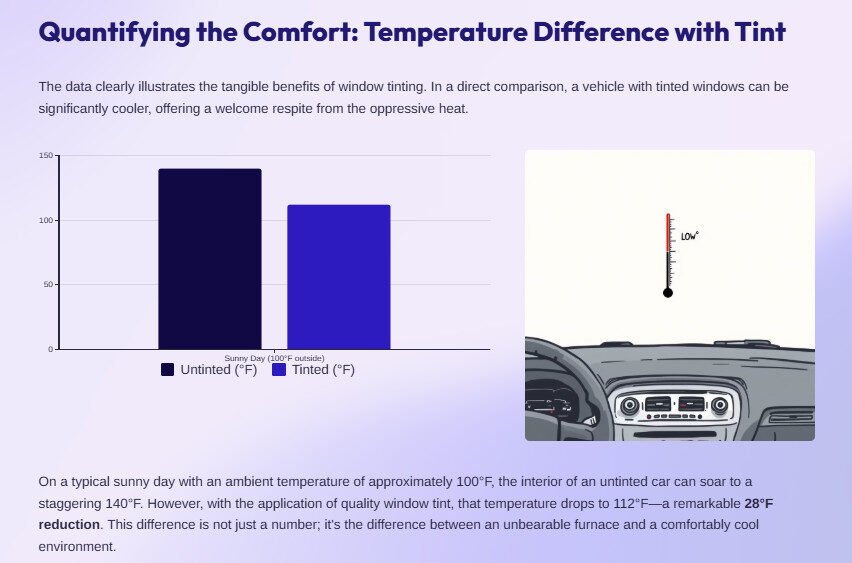
Vehicles face perhaps the most extreme conditions in hot climates, with interior temperatures routinely exceeding 140-160°F when parked in direct sunlight. This extreme heat damages interior components, poses safety risks, and creates uncomfortable driving conditions that take considerable time and energy to remedy.
Dashboard and Interior Component Preservation
Car interiors contain numerous materials vulnerable to heat and UV damage—vinyl dashboards, leather seats, plastic trim pieces, and electronic displays all degrade under sustained high temperatures. Dashboard cracking is particularly common in hot climates, where the combination of heat and UV exposure causes plastics to become brittle and split. Once cracking begins, it spreads rapidly and cannot be reversed, only replaced at significant expense.
Window tinting dramatically reduces interior temperatures and UV exposure, extending the life of all interior components. Studies show that tinted vehicles experience interior temperatures 40-60°F lower than untinted vehicles under identical conditions. This reduction keeps materials within their design tolerance ranges, preventing the accelerated aging that leads to cracking, fading, and failure. Door panels maintain their color, steering wheels don’t become too hot to touch, and seats don’t burn exposed skin on contact. The preservation effect compounds over years of ownership, maintaining resale value and appearance far longer than untinted vehicles.
Reducing Cabin Temperature Extremes
The practical daily impact of window tinting becomes obvious the moment you enter a parked vehicle on a hot day. Untinted cars become mobile ovens, with metal components like seatbelt buckles reaching temperatures that can cause burns. Starting the engine and waiting for air conditioning to cool the cabin becomes a necessary but uncomfortable ritual that wastes time and fuel.
Tinted vehicles present a dramatically different experience. While still warm after sitting in the sun, the temperature difference is immediately noticeable—typically 40-60°F cooler than untinted counterparts. This means you can enter the vehicle comfortably, touch the steering wheel without flinching, and achieve comfortable temperatures within minutes rather than the 10-15 minutes required in untinted vehicles. Air conditioning systems work more efficiently because they’re reducing temperature from a lower starting point, which reduces fuel consumption and wear on AC components. Line X Auto Spa frequently hears from customers who describe this daily improvement as one of the most valuable aspects of window tinting—the cumulative time and discomfort saved over years of ownership represents substantial quality-of-life enhancement.

Commercial Buildings and Energy Efficiency
Commercial spaces face unique challenges in hot climates, where large expanses of glass contribute to modern architectural aesthetics but create significant energy consumption and comfort issues. The financial implications of these problems scale with building size, making solutions like window tinting particularly valuable for business owners.
Office Spaces and Employee Comfort
Modern office design often emphasizes natural light and views, leading to extensive glazing that creates thermal comfort problems in hot climates. Employees working near windows experience temperature extremes—too hot from direct sun exposure or too cold from air conditioning overcorrecting for heat gain. This temperature inconsistency leads to decreased productivity, increased complaints, and HVAC systems working harder to compensate for heat entering through windows.
Window tinting eliminates hot spots and cold zones, creating uniform temperature distribution throughout office spaces. Employees near windows enjoy the same comfort as those in interior areas, natural light enters without accompanying heat, and HVAC systems operate more efficiently because they’re not fighting constant solar heat gain. The productivity impact shouldn’t be underestimated—studies consistently show that thermal comfort directly affects cognitive performance, focus, and job satisfaction. Additionally, reduced glare on computer screens eliminates the need for blinds or curtains that would defeat the purpose of windows entirely.
Retail Environments and Product Protection
Retail spaces face a specific challenge that goes beyond comfort—product damage from sun exposure. Merchandise displayed near windows fades, packaging deteriorates, and temperature-sensitive products can be damaged, resulting in lost inventory value and customer dissatisfaction. Clothing colors fade, plastics become brittle, and even cosmetics can separate or change consistency when exposed to sustained heat and UV radiation.
Window tinting protects inventory while maintaining attractive storefront displays that draw customers inside. Products can be displayed near windows without fear of sun damage, maintaining their appearance and value until sold. The energy savings from reduced cooling costs also benefit retail operations, where profit margins often depend on controlling overhead expenses. Large retail spaces with extensive glass facades see particularly dramatic energy consumption reductions after window tinting installation, sometimes reducing cooling costs by 30-50% during peak summer months. These savings flow directly to the bottom line, making window tinting an investment that pays for itself through reduced operating expenses.
Medical and Healthcare Facilities
Healthcare environments have exacting requirements for temperature control, patient comfort, and equipment protection. Window tinting addresses multiple concerns simultaneously in these sensitive settings where comfort directly impacts health outcomes.
Patient Room Comfort and Recovery
Patient rooms in hospitals and medical facilities should promote healing and rest, yet windows can create uncomfortable conditions that interfere with recovery. Patients often have limited mobility and cannot easily move away from sunny windows, and temperature fluctuations stress already compromised immune systems. Glare from bright sunlight can cause headaches, eye strain, and difficulty sleeping—all counterproductive to recovery.
Window tinting creates stable, comfortable environments conducive to healing. Natural light enters without excessive heat or glare, allowing patients to enjoy views and daylight exposure that research shows accelerates recovery. Temperature consistency reduces stress on the body, and the elimination of glare allows patients to watch television, read, or use electronic devices comfortably. Healthcare facilities implementing comprehensive window tinting programs often report improved patient satisfaction scores specifically related to room comfort—a metric increasingly tied to reimbursement rates and facility reputation.
Equipment and Medication Storage Areas
Medical equipment and pharmaceuticals require strict temperature control to maintain efficacy and safety. Many medications degrade when exposed to temperature fluctuations or direct sunlight, potentially becoming ineffective or even dangerous. Diagnostic equipment with sensitive electronic components can malfunction or provide inaccurate readings when operated in spaces with temperature instability.
Window tinting helps maintain the precise environmental controls necessary for medical storage and equipment areas. By preventing solar heat gain, tinted windows reduce the burden on HVAC systems tasked with maintaining narrow temperature ranges. This consistency is particularly critical in pharmacy areas, laboratory spaces, and equipment rooms where temperature excursions could compromise expensive inventory or diagnostic capabilities. The investment in window tinting becomes insignificant compared to the potential cost of compromised medications or equipment failure, making it a practical risk management strategy for healthcare facilities in hot climates.
Educational Institutions in Hot Regions
Schools and universities in hot climates face ongoing challenges providing comfortable learning environments, often with limited budgets for energy costs and facility improvements. Window tinting offers a cost-effective solution that improves conditions for students and staff while reducing operational expenses.
Classroom Environments and Learning Conditions
Classroom comfort directly impacts learning outcomes, yet many schools in hot climates struggle to maintain appropriate temperatures, particularly in rooms with significant window area. Afternoon classes in west-facing rooms become particularly problematic, with sun glare making it difficult to see boards or projection screens, and heat making it difficult to concentrate. Teachers often resort to closing blinds, eliminating natural light entirely and creating dim, less engaging learning spaces.
Window tinting preserves natural light while eliminating the heat and glare that create learning obstacles. Students remain alert and focused in comfortable temperatures, projection screens remain visible even with windows uncovered, and the connection to outdoor views helps prevent the closed-in feeling that reduces engagement. The cumulative effect across an academic year is substantial—students in comfortable classrooms demonstrate better attendance, attention, and academic performance compared to those in uncomfortable environments. Teachers also benefit from improved conditions, with reduced fatigue and better ability to maintain student engagement throughout the school day.
Library and Computer Lab Considerations
Libraries and computer labs present unique challenges where window tinting provides specific benefits. These spaces typically house valuable collections or expensive equipment that must be protected from sun damage while providing appropriate environments for study and research. Books, archives, and historical materials fade and deteriorate when exposed to UV radiation, representing irreplaceable losses for institutions.
Window tinting protects collections while maintaining the natural light that makes libraries inviting spaces for study. Computer labs benefit particularly from glare reduction, as screen visibility is essential for effective learning and work. Without tinting, these spaces often become dark caves with closed blinds to prevent screen glare, eliminating the benefits of windows entirely. Tinted windows allow natural light without glare, creating brighter, more pleasant environments where students can work effectively on computers while enjoying daylight and views. The energy savings from reduced cooling costs also benefit schools operating on tight budgets, allowing funds to be redirected toward educational programs rather than utility bills.
Automotive Considerations Beyond Comfort
Vehicle window tinting provides benefits extending beyond the immediate comfort improvements that first attract most people. These additional advantages become apparent over time and contribute to the overall value proposition of professional tinting.
Skin Protection During Daily Commutes
Most people don’t consider their daily commute a significant source of sun exposure, yet drivers and passengers receive substantial UV radiation through vehicle windows. Standard automotive glass blocks UVB rays but allows UVC rays to penetrate, contributing to skin aging, sun damage, and increased skin cancer risk. The left side of the face and left arm receive particularly intense exposure during driving, leading to asymmetrical aging and damage observable in long-term drivers.
Window tinting blocks up to 99% of UV radiation, providing medical-grade sun protection during every drive. Dermatologists increasingly recommend window tinting as a preventive health measure, particularly for people with daily commutes or occupations requiring significant driving. The protection is passive and continuous—you don’t need to remember to apply sunscreen or wear protective clothing every time you drive. Over years and decades, this daily protection makes a measurable difference in skin health, reducing cancer risk and slowing visible aging. For families with children who spend significant time in vehicles, this protection becomes even more valuable, preventing sun damage during vulnerable developmental years.
Fuel Efficiency and Air Conditioning Load
Air conditioning represents one of the largest drains on vehicle fuel efficiency, reducing miles per gallon by 10-20% when operating at maximum capacity. In hot climates where AC runs constantly, this efficiency penalty adds up to substantial fuel consumption and expense over time. The harder the AC system works, the more fuel the engine must burn to power it.
Window tinting reduces cooling requirements dramatically, allowing air conditioning to operate at lower settings while maintaining comfortable cabin temperatures. This reduced load translates directly to improved fuel efficiency—studies indicate that tinted vehicles see 3-5% improvement in fuel economy during hot weather compared to untinted vehicles. Over thousands of miles of driving annually, this improvement represents significant savings at the pump. Environmental benefits accompany the financial savings, with reduced fuel consumption meaning lower emissions. Line X Auto Spa notes that customers rarely consider fuel efficiency when initially exploring window tinting, but many report noticing the difference in their fuel costs after installation, particularly those with long commutes or frequent driving in hot conditions.
Line X Auto Spa Serving the CityPlace and Beyond in West Palm Beach, FL
Line X Auto Spa is dedicated to serving the diverse needs of the local community of West Palm Beach, FL. Including individuals residing in neighborhood like CityPlace With its convenient location near landmarks such as the “Dreyfoos School of the Arts, Raymond F. Kravis Center for the Performing Arts” major intersections like ” Banyan Blvd & Clearwater Dr and Datura St & S Quadrille Blvd” (coordinates: 26.70871231996144, -80.06692466453525) We offer Window tinting services.
Get Window Tinting Services at CityPlace Now
Navigate from CityPlace to Line X Auto Spa
How Window Tinting Helps in Hot Climates?
- Building Orientation Impact on Energy Savings:
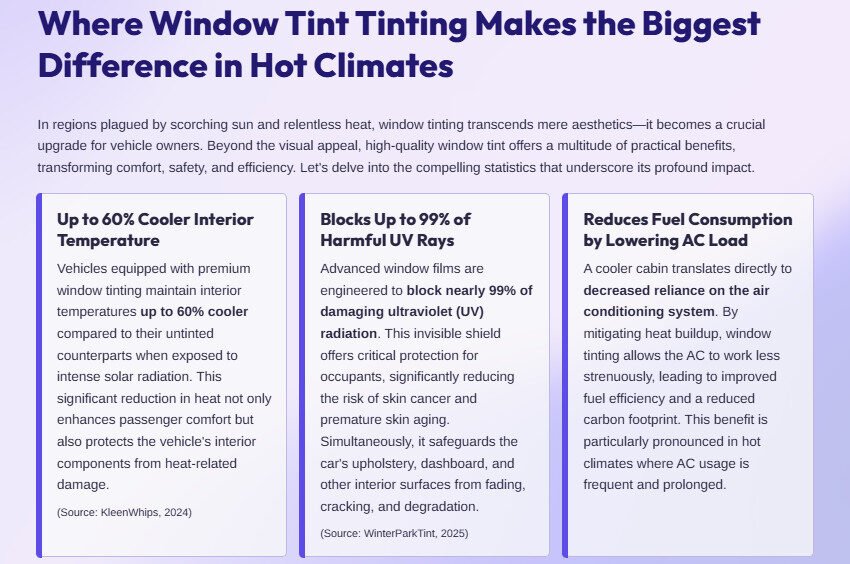
- Reflective window films reduce electricity use for cooling by up to 10.3% on northwest-facing windows, compared to 1.2%-4.2% on other orientations (East, South, West) [National Cheng Kung University, 2024].
- Heat-absorbing films also reduce cooling load but less effectively (max ~1.9% savings).
- Car Interior Temperature Reduction:
- Quality automotive window tint can lower interior temperatures by 8 to 20°F (4.5 to 11°C) in hot climates like Louisiana, significantly improving comfort and reducing A/C load [Extreme Car Audio LLC, 2025].
- Ceramic tint block up to 99% of UV rays and reflect up to 80% of infrared heat, the main driver of cabin heat buildup.
- Energy & Comfort Benefits in Hot-Arid Climates:
- Window films can reduce building cooling energy consumption by around 2.7% annually and cut CO₂ emissions, especially critical in regions with high solar radiation [Frontiers in Energy Research, 2021].
- Over 40% of cooling load in hot-arid climates is due to solar heat gain through windows, making tinting a cost-effective passive cooling method.
- Visual Chart Suggestions:
- Bar chart comparing electricity savings (%) by window orientation with different film types (Reflective vs Heat-absorbing).
- Line graph showing interior car temperature over time with and without window tint.
- Pie chart illustrating percentage of solar heat blocked by ceramic tint (UV, IR, visible light).
Sources: National Cheng Kung University (2024), Extreme Car Audio LLC (2025), Frontiers in Energy Research (2021)
Window tinting delivers measurable benefits across virtually every application in hot climates, from residential homes to commercial buildings, vehicles to healthcare facilities. The technology has evolved far beyond simple dark films to become sophisticated systems that selectively reject heat while preserving light, protect against UV damage, and reduce energy consumption substantially. Whether your priority is comfort, cost savings, health protection, or equipment preservation, window tinting addresses multiple concerns simultaneously with a single installation.
The locations where window tinting makes the biggest difference share common characteristics—high sun exposure, valuable assets requiring protection, people spending significant time in the space, and cooling costs representing major expenses. Understanding these priorities helps target window tinting investments for maximum impact, whether you’re starting with your vehicle, home, or commercial property. As temperatures continue rising and energy costs increase, window tinting transitions from luxury upgrade to practical necessity in hot climate regions, offering immediate improvements in comfort and long-term returns through energy savings and asset preservation.
Frequently Asked Questions
How long does window tinting typically last in hot climate conditions?
Quality window tinting installed by professionals typically lasts 10-20 years in hot climates, with ceramic films generally outlasting dyed or metallized options. The intense UV exposure and high temperatures in hot regions do accelerate degradation compared to moderate climates, but reputable films are specifically engineered to withstand these conditions. Proper installation is crucial—films that aren’t correctly applied may bubble, peel, or discolor within a few years. Most professional installations include warranties covering defects, fading, and adhesive failure for specified periods.
Does window tinting really make a noticeable difference in energy bills?
Yes, window tinting can reduce cooling costs by 25-50% depending on factors like window orientation, square footage of glazing, existing efficiency of HVAC systems, and climate intensity. Homes with significant west-facing glass or large window areas see the most dramatic savings. The reduction comes from preventing heat entry rather than removing it after it’s entered, which is far more energy-efficient. Most homeowners notice reduced electricity bills within the first month after installation, with payback periods typically ranging from 2-7 years depending on energy costs and installation scope.
Can window tinting be applied to any type of window?
Most windows can accept tinting, but some require specific film types or techniques. Standard annealed glass windows work with all film types, while tempered glass and insulated dual-pane windows require careful film selection to avoid stress fractures from thermal expansion. Very old windows with weak seals might experience issues, and some low-E windows already have coatings that can conflict with certain films. Professional assessment before installation helps identify any limitations and select appropriate films for your specific window types.
Will window tinting make my home or office too dark inside?
Modern window tinting films offer a wide range of visible light transmission levels, from very light tint that are barely noticeable to darker films for maximum privacy. Ceramic films particularly excel at rejecting heat without significant darkening—films with 50-70% VLT appear very light while still blocking substantial heat. During consultation, you can specify your priorities regarding natural light, and professionals can demonstrate how different tint levels appear. Most people find that even moderate tint don’t create darkness issues, especially when balanced against the ability to keep windows uncovered rather than closing blinds for heat control.
Is DIY window tinting as effective as professional installation?
DIY tinting can save money initially but typically doesn’t perform as well or last as long as professional installations. Proper application requires specialized tools, controlled environments, experience achieving bubble-free installation, and knowledge about which films suit different glass types. Mistakes during DIY installation can result in bubbles, creases, or improper adhesion that compromise both appearance and performance. Professional installers like those at Line X Auto Spa have the experience to avoid common pitfalls, offer warranties backing their work, and complete installations efficiently with superior results. For critical applications like vehicles or large home windows, professional installation generally proves more cost-effective long-term despite higher upfront costs.
Our Other Blog Posts Related Window Tinting
Learn How Window Tinting Reduce Glare on In-Vehicle Screens
How Window Tinting Enhance Driving Safety in Rain & Fog
How Window Tinting Boosts Energy Efficiency in Electric Vehicles
Window Tinting Heat Reduction | Keep Your Car Cool & Protected
Understanding UV Protection with Window Tinting in Riviera Beach | Line X Auto Spa