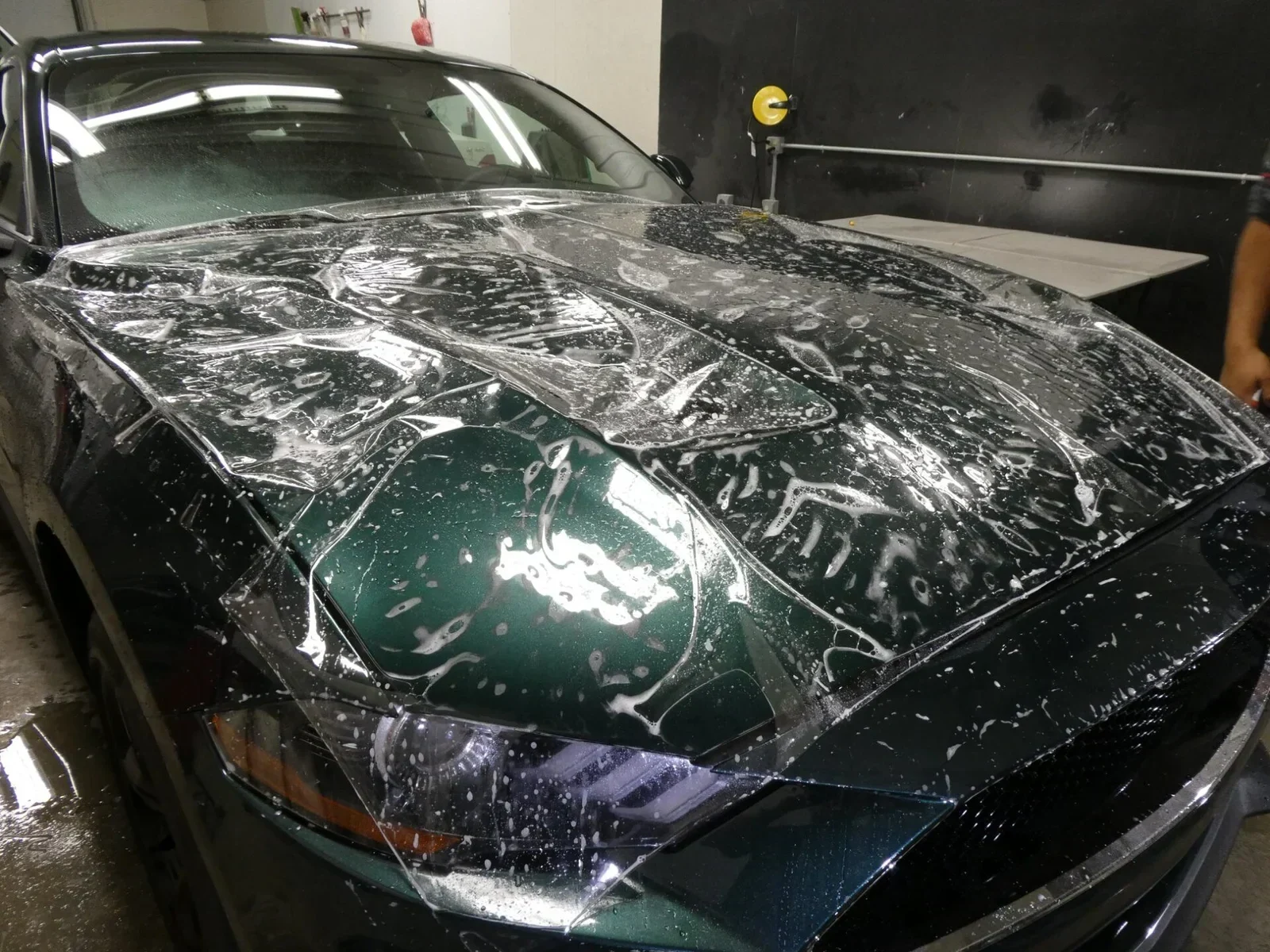
Have you ever watched a scratch on your car seemingly disappear on its own and wondered if you were imagining things? You weren’t. Modern paint protection film in Wellington has evolved into something that sounds like science fiction but is very much real. This technology is transforming how Wellington vehicle owners protect their investments, especially in Florida’s challenging climate where your car faces constant assault from road debris, intense UV rays, and environmental contaminants.
At LINE-X Auto Spa, we’ve witnessed countless amazed reactions when customers see minor scratches vanish from their freshly protected vehicles. Whether you’re driving through the Mall at Wellington Green or heading to the Palm Beach International Equestrian Center, your car encounters hazards that can damage its finish. Understanding how self-healing paint protection film actually works helps you appreciate why this technology has become the gold standard for vehicle surface protection.
Understanding Paint Protection Film Basics
Before diving into the self-healing aspect, let’s establish what paint protection film actually is. Paint protection film, often called PPF or clear bra, is a thermoplastic urethane film applied to your vehicle’s painted surfaces. It acts as a sacrificial barrier between your car’s paint and the outside world.
Think of it as invisible armor for your vehicle. The film is transparent, so it doesn’t alter your car’s appearance, but it’s tough enough to absorb impacts that would otherwise chip or scratch your paint. Traditional paint protection films did this job well, but they would show wear over time. Scratches and swirl marks accumulated on the film’s surface, eventually making it look dull or damaged.
What Makes Modern PPF Different from Traditional Films
The game changed when manufacturers developed self-healing properties. Modern Paint Protection Film shop in Wellington, FL incorporates advanced polymer technology that allows the film to repair itself when damaged. This isn’t marketing hype. It’s actual material science at work.
Earlier generation films were static. Once scratched, they stayed scratched. You had to either live with the imperfections or replace the film entirely. Self-healing films changed this dynamic completely, extending the life of the protection and keeping your vehicle looking pristine for years longer.
The Science Behind Self-Healing Technology
The magic behind self-healing paint protection film lies in its unique molecular structure. Understanding this helps you appreciate just how sophisticated this technology really is.
Elastomeric Polymer Composition
Self-healing PPF is manufactured using special elastomeric polymers. These are long-chain molecules that have an incredible property called shape memory. At the molecular level, these polymers want to return to their original configuration. When you scratch the surface, you’re temporarily disrupting this molecular arrangement, but the polymers have a built-in drive to reorganize themselves back to their original state.
The top coat of self-healing film contains these specialized polymers at high concentrations. This layer is engineered specifically for its healing properties, while the underlying layers provide structural strength and adhesion. It’s a multi-layer system where each component serves a specific purpose.
Heat-Activated Memory Properties
Here’s where it gets really interesting. These polymers are thermally activated, meaning heat triggers their self-healing response. The molecular chains become more mobile when heated, allowing them to flow back into their original position. This fills in scratches and smooths out the surface imperfections.
You don’t need extreme temperatures for this to work. The ambient heat from sunlight is often sufficient to activate the healing process. In Wellington’s sunny climate, this happens naturally throughout the day as your vehicle sits outdoors.
How the Self-Healing Process Actually Works
When you understand the step-by-step process, the technology becomes less mysterious and more fascinating.
Minor Scratches and Swirl Marks
When something scratches the surface of your paint protection film, it creates a groove or indentation in the top layer. At the microscopic level, the polymer chains have been stretched and displaced from their preferred arrangement. They’re under stress in this new configuration.
As soon as heat is applied, whether from the sun, warm water, or even the heat from your hand, the polymers gain enough energy to become mobile. They begin flowing and redistributing themselves to eliminate that stress. The scratch fills in as the material flows back to its original smooth surface.
The Role of Heat in Healing
Temperature is the catalyst that makes healing possible. Most self-healing films activate around 140-160 degrees Fahrenheit. On a sunny day in Wellington, your car’s surface easily reaches these temperatures. The darker your vehicle color, the hotter it gets, which can actually speed up the healing process.
Some people accelerate healing by pouring warm water over minor scratches or using a heat gun on low settings. The heat doesn’t need to be applied for long. Sometimes just a few seconds of warmth is enough to trigger the molecular reorganization that eliminates visible scratches.
What Damage Can and Cannot Self-Heal
It’s important to have realistic expectations. Self-healing technology is remarkable but not unlimited. The film can heal minor surface scratches, swirl marks from washing, and light abrasions. These are the types of damage that affect only the top clear coat layer of the film.
Deep scratches that penetrate through the self-healing layer into the base film cannot heal. Similarly, cuts, gouges, or punctures exceed the technology’s capabilities. However, even in these cases, the Paint Protection Film in Wellington, FL still protects your actual paint underneath. The film takes the damage instead of your car’s finish.
The Chemistry of Shape Memory Polymers
Getting a bit more technical helps you understand why this technology works so consistently and reliably.
Molecular Structure and Elasticity
Shape memory polymers have two key components at the molecular level. There’s a fixed phase that maintains the overall shape and structure of the film, and a reversible phase that allows movement and healing. The fixed phase is like the skeleton, while the reversible phase is like flexible muscles that can move and adapt.
When the film is manufactured, it’s created in a specific molecular arrangement. This becomes the “memory” that the material wants to return to. Chemical cross-linking creates this permanent memory. When scratched, only the reversible phase is affected. Heat allows this phase to flow back to align with the fixed phase’s structure.
The elasticity of these polymers is extraordinary. They can stretch significantly without permanently deforming. This elasticity is what allows the film to absorb impacts without cracking and to reform itself after being scratched.
Real-World Applications in Wellington’s Climate
Wellington’s environment actually works in your favor when you have self-healing paint protection film installed.
How Florida Sunshine Activates Healing
The abundant sunshine that Wellington receives year-round continuously activates the self-healing properties of your film. Your vehicle doesn’t need to sit in direct sunlight for hours. Even brief exposure during your daily activities provides enough heat to maintain the film’s pristine appearance.
This passive healing happens without you doing anything. You might notice a light scratch after washing your car, then find it gone the next afternoon after your vehicle has been parked outside. This automatic maintenance is one of the biggest advantages of self-healing technology in sunny climates.
Humidity and Temperature Effects
Wellington’s humidity doesn’t interfere with the self-healing process. In fact, the consistent warmth throughout most of the year means the film remains in optimal condition for healing. Unlike climates with harsh winters where the film might become brittle, Florida’s temperatures keep the polymers flexible and responsive.
The combination of heat and humidity can actually enhance the film’s protective qualities. The film remains supple and continues adhering properly to your vehicle’s contours over time.
Longevity of Self-Healing Properties
A common question is whether the self-healing ability wears out over time. Understanding this helps you gauge the long-term value of the investment.
How Long Does the Technology Last
The self-healing properties are built into the molecular structure of the film itself. They don’t deplete like a chemical coating that wears away. As long as the film remains intact, the self-healing capability continues functioning. Quality paint protection film from LINE-X Auto Spa maintains these properties for the entire lifespan of the film, typically 7-10 years or more.
What does degrade over time is the film’s overall thickness. As the top layer heals from hundreds or thousands of minor scratches over the years, it very gradually thins. However, manufacturers engineer the film with enough thickness that this thinning doesn’t compromise protection or self-healing for many years.
Environmental factors like UV exposure affect all automotive materials over time. Modern self-healing films include UV stabilizers that protect the polymers from sun damage, ensuring the healing properties remain active throughout the film’s life.
Comparing Self-Healing to Non-Self-Healing Films
The difference becomes obvious when you see them side by side after a few months of use.
Non-self-healing films accumulate every minor scratch and swirl mark they encounter. After regular washing and normal driving, they develop a network of fine scratches that dulls their appearance. The protection is still there, but the film looks worn.
Self-healing films maintain their clarity and gloss. Those same minor scratches disappear, leaving the film looking nearly new. This isn’t just cosmetic. The smooth surface continues providing optimal protection and doesn’t trap dirt and contaminants the way scratched surfaces do.
When professionals at LINE-X Auto Spa install Paint Protection Film in Wellington, FL with self-healing technology, they’re providing a solution that stays effective and attractive far longer than traditional alternatives. The initial installation might be similar, but the long-term results are dramatically different.
Conclusion
Self-healing paint protection film represents a genuine advancement in automotive protection technology. The science behind it, involving elastomeric polymers with heat-activated shape memory properties, allows your vehicle’s protective layer to repair itself from minor damage automatically. For Wellington drivers facing daily exposure to road debris, intense sunlight, and environmental contaminants, this technology offers ongoing protection that maintains its effectiveness and appearance for years. Understanding how the molecular structure responds to heat and reforms itself helps you appreciate why self-healing PPF has become the preferred choice for vehicle owners who want the best long-term protection. The technology works with Wellington’s climate rather than against it, using the abundant Florida sunshine to continuously refresh and repair the protective barrier keeping your car’s paint pristine.
Ceramic coating in Wellington, FL enhances your vehicle’s gloss and shine by forming a smooth, durable, bonded layer over the paint that boosts light reflection, deepens color vibrancy, and helps maintain a showroom-like finish while repelling water, dirt, and environmental contaminants.
FAQs
How quickly does self-healing paint protection film repair scratches?
The healing time varies based on scratch depth and temperature. Light surface scratches in warm conditions can disappear within minutes. Deeper scratches that are still within the self-healing layer might take several hours of heat exposure to fully heal. In Wellington’s sunny climate, parking your vehicle in the sun for 30 minutes to an hour typically heals most minor scratches completely.
Can I speed up the self-healing process manually?
Yes, you can accelerate healing by applying heat directly to scratched areas. Pour warm water over the scratch, use a hair dryer on low heat, or simply run your hand over the area repeatedly to generate friction heat. The key is using gentle heat around 140-160 degrees Fahrenheit. Avoid excessive heat that could damage the film or underlying paint.
Does the self-healing feature work in cold weather?
Self-healing works best in warm conditions but still functions in cooler temperatures, just more slowly. The polymers need heat to become mobile enough to flow and reform. In cold weather, the healing process slows significantly or stops until temperatures rise. This is rarely an issue in Wellington’s climate, where temperatures support active healing year-round.
Will the film heal scratches that go all the way through to the paint?
No, self-healing only works for scratches within the film’s top clear coat layer. If damage penetrates through the entire film to your vehicle’s paint, the film cannot heal that deep damage. However, the film still serves its purpose by taking that damage instead of your paint. Deep scratches in the film usually indicate it successfully protected your actual car finish from permanent damage.
How can I tell if a scratch is too deep to self-heal?
Run your fingernail gently across the scratch. If your nail catches in the groove, it’s likely too deep for complete self-healing. Surface scratches that you can barely feel typically heal completely. Another test is to apply warm water to the scratch. If it disappears when wet but reappears when dry, it’s probably shallow enough to eventually self-heal with adequate heat exposure. Deep white scratches that remain very visible even when wet usually exceed the self-healing layer’s thickness.